The Co-operative has launched a campaign insisting it’s still the “UK’s leading ethical bank” despite it being 70 per cent owned by a set of personal investors.
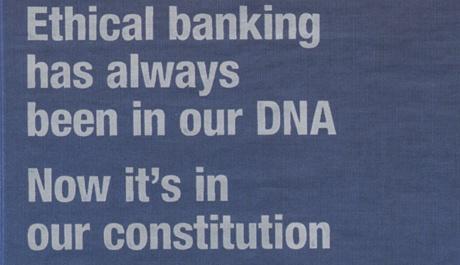
Press ads seek to reassure customers rescue deal cannot change ethical stance.
The group has today (4 November) detailed a rescue plan for its banking division designed to plug a £1.5bn hole in its finances.
As component of the plan, the Co-operative group will invest £462m inside the bank and become the unit’s largest shareholder with a 30 per cent stake. However, creditors, including several hedge funds, will own 70 per cent of the bank and invest £1.06bn.
The Co-operative Bank’s advertising has focussed as much on its ethical lending and investment practices because it has on its services and products. Its customer base swelled within the wake of the financial crisis as customers searched for alternatives to the large high street banks.
The bank has taken out full-page advertisements in today’s newspapers with the headline “Ethical banking has always been in our DNA, now it’s in our constitution” a connection with the “legally binding” addition of a moral code of conduct to the bank’s constitution.
Euan Sutherland, group chief executive of The Co-operative Group, says the crowd will continue to have a “significant influence” at the bank’s direction.
“We have enshrined the values and ethics that lie on the heart of The Co-operative Group into the hot rules that govern the bank.
“We have hooked up a values and ethics committee which will be chaired by a senior independent director. The bank would be what its customers expect of it – an even, responsible and trusted bank that delivers great service to retail and small business customers, underpinned by the values and ethics of the Co-operative movement.”
In an extra move to reassure customers it has not abandoned its proposition, the bank may also canvas them on social media and via unsolicited mail early next year “on what our ethical policy commits us to”.
Meanwhile, the bank has also announced it’s going to reduce the scale of its branch network by about 15 per cent, which might see about 50 branches close. Sutherland told the BBC it should “significantly enhance” its online banking operation in this case.
The group’s perilous financial position derives from debts incurred because of the merger with the Britannia Building Society in 2009 and the price of compensating customers mis-sold payment protection insurance.
The rescue deal is a renegotiation of the complex “bail-in” process announced in June.