The selling Week

Welcome to The promoting Week, your guide to the great, the bad and the ugly within the marketing industry during the last seven days.

CAMPAIGN OF THE WEEK

red-cross-2013-460

In every week dominated by the terrible tragedy unfolding within the Philippines, the British Red Cross’ latest campaign took on a better sense of poignancy. The charity is running an immersive theatre experience this month to mark its 150-year anniversary because it looks to recruit the following generation of volunteers. Visitors are treated to a chain of scenes from the 1950s to the current day, with actors picked from refugee communities used to spotlight the distress of people who were displaced. The move aims to showcase one more side of the British Red Cross brand within the hope of attracting new volunteers and donors.  

GOOD WEEK

Nationwide

New rules that make it easier for folk to modify their checking account brought about a hurry of consumers heading to Nationwide. It says it opened greater than 214,000 new current accounts in its first-half, up 16 per cent year on year, with 54,000 of these switching their main accounts to the gang.

Nationwide is crediting its campaign with persuading unhappy current account customers to make the switch. The ‘you don’t want a bank’ ads tapped into distrust of traditional high street banks akin to Natwest, Barclays and Royal Bank of Scotland following the financial crisis and LIBOR rate-rigging scandal. Profits also are up, greater than doubling to £332m and its share of the present account market rose from 5.2 per cent to six per cent.

BAD WEEK
StarbucksPacks-Product-2013_460

Starbucks must pay Kraft almost $3bn after terminating its take care of america food producer.

Starbucks was hit with a $2.7bn (£1.7bn) fine for cutting short its grocery take care of Kraft Foods. Both firms were in dispute since 2011, when the coffee company “prematurely terminated” its contract with Kraft to sell bags of Starbucks-branded coffee in stores. The fine shrinks Starbuck’s previously reported net profit of $1.7bn (£1.06bn) for the year to September to $8m. However, it also reduces its global tax bill from $832m to a credit of $239m.Starbucks has come under fire from politicians and the general public for the quantity of tax it pays within the UK. It maintains it has done nothing wrong however it has seen its brand reputation dented by the scrutiny.

INTERNATIONAL NEWS

ASOS eyes Eastern promise

ASOS truly became an international player this week with the launch of its Chinese ecommerce site adding to its already-existing seven portals taking within the UK, Europe, Russia and the us. The location contains localised pricing and localised editorial.

Pandora pitches user data

US online radio company is pitching advertisers ad slots, with the additional benefit of mining its user data to profile its listeners. The event has take place as a consequence of how its users access the service on mobile devices where using cookies, the main approach to online ad targeting on desktop, are largely redundant. 

ONE TO OBSERVE: Bluetooth’s return

Marketing Week covered how UK retailers were in exploratory talks to trial Apple’s iBeacon technology to enhance in-store marketing, generate a ‘single customer view’ and ultimately combat ‘showrooming’. This technology works at the Bluetooth 4.0 technology and poses a possible threat to the (still nascent) NFC technology as a mobile marketing platform, given Apple’s refusal to support the latter.

TWEETS OF THE WEEK

@reiinamoto  – chief creative officer at AKQA offering sage advice
“Business ideas from the least expected players will disrupt your brand faster than advertising can save it”

@WeveUK – the mobile operator joint venture’s new data platform
”Today we stood up our strategic data platform where loads of magic goes to happen one day. Like starting the ignition on a Ferrari.”

@paulbmobile  – former Mobile Marketing Association CMO and now CEO of mCordis tweeting from the MMA EMEA Forum event
”Consumers don’t believe brands when everyone claims the similar thing: trust is damaged as consumers are lied to each day @adisave #MMAF2013”

@RealJaffaCakes – Jaffa Cake’s social media manager having a little Friday fun                                                                                                                                                                                                                                               ”.@CostaCoffee @mumoftwotiggers @tescomobile @YorkshireTea We’ve always wondered – does Antony Costa get a free latte whenever he visits you?”

  • DATES TO YOUR DIARY
  • 9 November – ITV may be revealing earnings from its third quarter because the broadcaster looks to reassure advertisers of its resilience amid the shift to online viewing.
  • 22 November – Pernod Ricard is celebrating the 20 th anniversary of its Havana Club International joint-venture with the Cuba government.
  • 22 November – Microsoft launches the Xbox One with a campaign backed by music stars reminiscent of Macklemore and Ryan Lewis.

Dogs Trust reignites ‘Dog is for life’ slogan with social media campaign

The Dogs Trust is marking 35 years of its famous ‘A dog is for all times not only for Christmas’ slogan with a social media campaign geared toward getting people to think of the long-term commitment that incorporates buying a dog. 

dogs-trust-paws-2013-460.jpeg

Dogs Trust’s #presspaws campaign

Speaking to Marketing Week, CEO Clarissa Baldwin, who came up with the slogan 35 years ago when she was the firm’s PR officer, said the strapline resonated as a result of its simple, direct message. However, it now needed updating to include a much wider message about getting people to consider the commitment needed, both within the short and long-term term, when buying a dog.

“People think we’re just talking about ’don’t buy a dog at Christmas’. Actually we’re saying ’don’t buy a dog for somebody who doesn’t know in the event that they desire a dog or not or can’t decide to guard it for its whole life’. It’s a message to get people concerned about what they’re doing,” she said.

She said the net has brought about new problems, with people ready to buy dogs impulsively without doing the research after which abandoning them after they can’t cope. Previously there have been no rules for websites that sell dogs, however Baldwin said DEFRA is operating with a number of animal charities to agree a collection of minimum standards.

These are actually being implemented and Dogs Trust might be showing ads on such sites laying out information on a way to buy and safeguard a tender dog.

“It’s the moment gratification culture that could be a problem. People need a dog they usually want it now and they go browsing, find person who looks sweet and purchase it. We need to communicate that purchasing a dog is a huge undertaking and responsibility and ensure we get our education messages across,” she added.

Dogs Trust can be working with brands and ad agencies to make certain they don’t repeat previous mistakes. Brands corresponding to Boots, John Lewis and Morrisons have come under fire for depicting what can be construed as animal cruelty of their ad campaigns.

Tesco is the latest brand to return in for criticism after publishing an image that gave the impression to promote getting a dog for Christmas in its gift guide.  Baldwin called the supermarket’s marketing a “shocker” and said the Dog’s Trust is now in talks with Tesco to place its educational message into the supermarket’s magazine.

Brazil unveils online ad campaign previous to World Cup

The Brazilian tourist agency Embratur is rolling out a brand new advertising campaign on social media across seven countries, including the united kingdom, previous to the 2014 FIFA World Cup.

The ad is devised to showcase what the rustic has to provide all visitors coming to attained large scale events just like the football tournament and $10m is being invested inside the campaign this year

It has just launched within the UK and also is showing within the Usa, Argentina, Chile, Colombia, Mexico and Germany.

The ad is framed as if preparations for a lavish party are happening in a good looking house.

Brazil is expecting 600,000 fans and tourists to reach within the country for the beginning of the sector Cup on 12 June next year. The 30-day tournament will occur across 12 host cities and the rustic is anticipating a large boost for Brazilian businesses and the economy as an entire.

However, the rustic has experienced some civil unrest this year when it comes to the price of hosting the arena Cup, amongst other issues.

The president of Embratur, Flávio Dino, says: “The World Cup is a smart opportunity for Brazil to turn off its wonderful natural resources, its vibrant cities and, it needs to be said, its excellent football. The tourism industry generates almost 3% of GDP and employs almost 10 million people, who can be directly laid low with the development.”

Tourism in Brazil generates almost 3 per cent of the country’s GDP.

Asda CMO: ‘Rivals’ price-matching schemes are anticompetitive’

Asda’s marketing chief says he finds rivals attempts to compare each other’s prices ‘anticompetitive’ and that it’ll continue to speak its 10 per cent cheaper message.

asda-xmas-2013-460

Asda’s Christmas campaign specializes in its 10 per cent lower price promise

Speaking at an event in London yesterday (14 November) CMO Stephen Smith criticised price-matching schemes similar to Sainsbury’s Brand Match, which offers to check rivals’ prices for branded goods, and Tesco Price Promise, consisting of branded and own-brand grocery products.

“It is strange to me that our competitors are touting how much they match prices and are practising parity. i locate it almost anticompetitive that enormous competitors are talking about and proud to be matching each other’s prices. We’re the only ones standing up and saying we’ll be 10 per cent cheaper,” he said.

Asda’s Christmas marketing this year, while expanding to encompass quality, will still “relentlessly” talk about price. That features taking a dig at rivals with its 10 per cent lower price promise and an “aggressive” spot the adaptation campaign.

In a shift from last year, it won’t discuss any form of vouchering or money-off coupons. Smith criticised rivals for investing in promotional gimmicks by offering vouchers while while increasing prices.

Asda has announced it’s putting £1bn into keeping prices low over the subsequent five years, £400m greater than it previously planned to take a position.

“When our competitors voucher, somebody has to pay for those vouchers. We see it as their customers are paying and that’s not a direction we wish to go. They put money into gimmicks, we spend money on price,” he said.

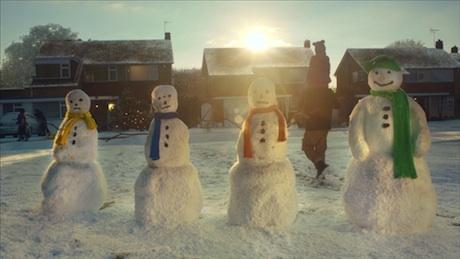
Asda’s Christmas marketing message continues its concentrate on pricing, taking aim at rivals with a snowman ad that enhances the ten per cent lower cost. It also includes planning to push a top quality message and highlight key items corresponding to its wines and bakery selection within the run-as much as Christmas, deliberately eschewing rivals’ emotional brand messages.

”This year we’ve got an incredibly integrated trading plan that’s all based around big bets. We’ve built a campaign it truly is way more hardworking, delivering a lot of messages.

“I love watching other people’s ads. Would I actually have done them? Not likely. But I’m not of their seats, I don’t know their business plans.”

Smith said its Christmas snowman ad received 2.2m views on Facebook, giving it more reach than print ads and helping to spice up loyalty. He added that the supermarket has a “rule” on social media that it posts 9 messages which might be “fun, engaging and build a conversation” before it would post any commercial message.

“It’s a very simple rule, but what it’s doing for us is building a relationship with our Facebook fans.

“We do various research on understanding those customers and they’re our most loyal customers, they’re our advocates. When times are tough they’re going to defend us and that they keep us honest,” he said.

Amazon faces fury from anti-racism groups over ‘Golly’ doll

Amazon is under fire from anti-racism groups for not responding to requests that it removes a Golly fancy dress outfit from its listings pages. 

The offending items retail at £34.99 and are listed by Orion Costumes (see image) alongside several user requests that the articles be taken down.  

Although a minority of comments defend the item as a “much loved toy from the past made offensive by the computer brigade”, the overwhelming majority express disgust at their presence at the store.

One comment reads: “How on God’s green earth Amazon can justify selling this odious outfit, to anyone of sound mind and sensitivity, is beyond me?!”

Further controversy erupted yesterday (14 November) when Amazon refused to publicly acknowledge demands its removal from both private store users and anti-racism groups.

Speaking to The Sun, Helen Pattison from Youth Against Racism, said: “Yet again Amazon has shown it highly offensive and demeaning products so long as they’ll make a profit.”

Several other anti-racism groups were also quick to voice their disgust at Amazon.

The incident follows Amazon yielding to public pressure to take away pages promoting a ‘Zombie-fied’ outfit of disgraced UK DJ Jimmy Saville (see image), following an analogous public outcry, last month.

Adidas similarly fell foul of public sentiment in 2012 when it launched its Roundhouse Mid trainer which came with ankle cuffs a twin of slaves’ shackles (see image). 

Ryanair launches new-look website

Ryanair has unveiled its new-look website, the primary in a chain of improvements to Ryanair.com because the budget airline continues with plans to shake off its reputation for poor customer support.

ryanair

The new-look website offers a less cluttered homepage and simpler booking process, scaling down the collection of clicks essential to book a flight from 17 to five. Ryanair has already removed features which includes Recaptcha and is planning further updates including a passenger registration service and fare finder feature because it looks to make it easier and faster for patrons to finish bookings.

Ryanair says: “We’re happy to unveil our new look home page, the primary in loads of significant improvements to the Ryanair.com website which we’ll be rolling out over the arrival months as we continue to enhance our customer support and passenger experience.”

This is simply the newest move from Ryanair to enhance its brand reputation within the face of growing criticism from both customers and shareholders over its poor customer support. The airline currently languishes on the bottom of just about every metric for airlines on YouGov’s BrandIndex, from reputation and satisfaction through to impression and quality.

Previously this criticism hadn’t worried the firm as a result of its strong growth. However, Ryanair recently issued its second profit warning of the year, cutting its forecast for the year to March from €570m to €510m, below the €569m it made last year.

The airline also predicted there’ll be a “pause” in traffic growth over the following year.

Changes already announced include a cut in fees and a shift to totally allocated seating. Ryanair is additionally overhauling its digital business plan, with the airline investing more in mobile and social media and is currently trying to hire its first marketing director.