Burberry credits marketing for pushing revenues past £1bn for first time

Burberry is crediting increased investment in marketing and ‘brand momentum’ with helping push revenues past the £1bn mark for the 1st time because it prepares for CEO Angela Ahrendts’ departure to Apple next year.

burberry-christmas-2013-460

Burberry’s Christmas marketing campaign

In the six months to 30 September, revenues were up 17 per cent compared with an analogous period a year ago to £1.031bn, up from £883m a year ago. Pre-tax profits were almost flat, rising from £173m to £174m, better than expected in the beginning of the year and reflecting costs related to bringing its beauty business in-house.

The financial update is the primary because it was announced CEO Angel Ahrendts could be leaving to hitch Apple and can get replaced by chief creative officer Christopher Bailey. Speaking on a conference call with analysts, she said Burberry is targeted on executing its festive business plan, that’s in keeping with the theme Burberry with love, to enhance sales over the Christmas quarter.

In an announcement Ahrendts added: “The first half performance reflects the continued strength of our global brand momentum. We remain fascinated by executing our retail, digital and marketing strategies within the all-important third quarter and in what remains an uncertain macro environment.”

Ahrendts said digital remains to be a key point of difference for Burberry when compared with its competitors. In-store iPads now account for 30 per cent of its online business and it has click-and-collect services in additional than 80 locations globally.

It is continuous to lean towards digital for its marketing. As an instance it collaborated with Google for Burberry Kisses, which allowed users to capture and send a kiss, and Apple to film its Spring Summer 2014 runway show.

Outerwear also remains on the core of its marketing activity and grace is being integrated into brand promotions following its decision to take control of the business. Burberry announced its biggest fragrance launch so far in September, with a worldwide campaign inspired by British music.

Bailey is because of take over the executive executive role in the midst of next year, but says it’s “business as usual” on the brand with a continued give attention to its positioning in “Britishness” and talking to a higher generation of shoppers via digital. The firm is making a new chief design officer role to be able to set the creative direction and vision of the emblem.

“We have taken back control of licensing and the logo, the results of that’s now we have built an organization with a particular and consistent perspective that defines Burberry today. There’s still fuel inside the tank,” said Bailey.

Meanwhile, TopShop, BHS and Dorothy Perkins owner Arcadia has posted a 2.7 per cent drop in sales for the year to 31 August from stores opened before the beginning of its financial year.  The drop in sales drove operating profit right down to £225.2m, from £220.9m within the previous financial year.
 
The company said it was attempting to mitigate “challenging trading conditions” by “engaging our customer across multi-channels”.
 
Topshop, as an example, partnered with mobile sound app Chirp for London Fashion Week in September to create an app that permit users quickly share information with people within the same place via a ‘chirp’ sound. 
 
TopShop recently appointed Sheena Sauvaire to the executive marketing officer role, following the departure of Justin Cooke who has left to form his own agency.article  Sauvaire  is liable for enhancing its multi-channel offer.
Blinkbox requires audio, mobile ad standardisation

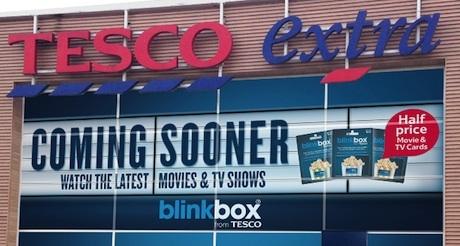
Tesco-owned Blinkbox Music aims to place mobile and audio on the core of its proposition to encourage consumers to buy items across its array of multi-channel outlets, including ecommerce and in-store sales, because it aims to guide moves to standardise such ad formats. 

tesco-blinkbox-2013-460

Tesco’s online content player eyes opportunity to link audio ads and ecommerce.

Speaking at an IAB event earlier today (13 November), Andy Dennis, head of advertising at Blinkbox Music, called for cross-industry cooperation to assist standardise audio ad formats that could perform around the major mobile platforms.

“Mobile is on the core of our business, as users use their mobiles an increasing number of,” he said, adding Blinkbox Music aims to make use of its membership of the recently-formed IAB Audio Council to aid result in a cross-industry agreements to implement this sort of standards.

During the development, Dennis also told attendees the retailer aims to exploit the web music service – which launched in beta June this year – to assist drive sales of its digital content, services, in addition to drive sales of FMCG items, in its stores.

This ambition can be on the core of Tesco’s means of launching quite a number own-branded consumer electronic devices, along with this year’s launch of the Android-powered Huddle device. 

He added: “Entertainment, FMCG and retail brands made up the highest three spenders in mobile advertising last year [in accordance with IAB stats] this puts us in an excellent position to be. 

“Consumption has changed, the best way consumers shop online has changed and we’re seeking to remain relevant to our customers’ lives.”

Motorola goes after budget buyers with ‘marketers’ dream’ Moto G smartphone

Motorola is hoping to entice a brand new generation of smartphone owners with the Moto G, a handset that it claims is ‘god’s gift to marketers’ since it combines a low cost tag with premium specifications.

The phone, which works on sale inside the UK later this week, will cost £135 off contract. It includes an edge-to-edge 4.5-inch HD screen, a quad-core processor and what the corporate describes as an “all day battery”.

It is the simplest device in its budget to return with Android 4.3 Jellybean, with a promise it will become upgraded to the latest version, 4.4 KitKat, before everything of 2014. Tech reviewers and experts have heralded the device as a rival to the HTC One Mini and Nokia’s Lumia 520, which runs Microsoft’s Windows Phone operating system.

Speaking to Marketing Week, EMEA senior marketing director Marcus Frost, described the telephone as a “marketers’ dream”. He claimed it fills an opening available in the market between those that desire to buy expensive smartphones that provide the most recent innovations and budget-conscious consumers.

“We understand what the common person in the street is after and are meeting their demands. Nobody has yet solved this problem,” he said.

Specifically, Motorola goes after three sorts of customer. Firstly those who own feature phones and feature never quite seen the worth in upgrading to a smartphone.

Secondly, consumers which can be using friends’ hand-me-downs that frequently feature out-dated operating systems. Lastly, people who buy old models of latest smartphones, which include the Galaxy S III or iPhone 4.

Motorola is planning to market the telephone round the strapline “An exceptional phone at an outstanding price”. It’s already promoting the telephone on social media, with digital forming the central portion of its “multi-million dollar” strategy.

Frost cited figures that 70 per cent of shoppers research a phone online before buying, with 50 per cent of them watching a video. Motorola already has a 1 minute video on YouTube and is teasing the telephone across Facebook, Twitter and Google+.

It is additionally working “closely” with mobile operators and retailers to maximize sales in-store, providing them with devices and coaching.

The Moto G is the most recent addition to the Moto franchise, which Motorola launched in the summertime with the debut of the Moto X. It truly is its flagship device geared toward early adopters, with the firm positioning the Moto G as its little brother.

Motorola should be hoping that the Moto brand may help turn round the phone maker’s fortunes. In its latest quarter its losses widened by 24 per cent year on yet to $248m and its revenues dropped from $1.78bn to $1.18bn.

This is the 1st phone from Motorola to launch within the UK following the company’s acquisition by Google in 2011. Frost said the “magic” of being a part of Google means it may combine a vanilla Android experience with supply chain innovations and Motorola engineering to provide a phone that gives a “premium experience at a fragment of the price” of the contest.

Philips introduces “innovation and you” strap in marketing overhaul

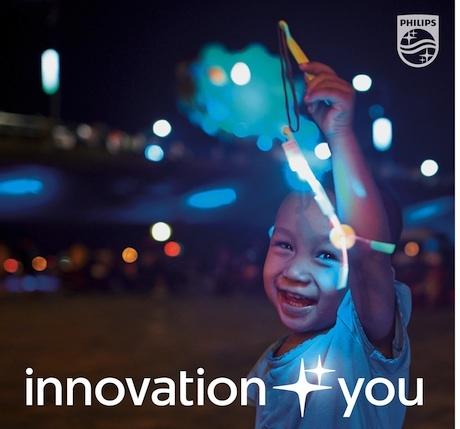
Philips has introduced a brand new strapline and a revamped logo as a part of a marketing overhaul in an effort to see all future activity communicate how its products impact people’s lives. 

Philips logo.

Philips has introduced a brand new strapline, ‘innovation and you’ and logo.

“Innovation and you” will replace “Sense and Simplicity” in all future marcomms. Frans van Houten, chief executive of the corporate, says the switch attempts to capture the “innovation that was in our blood since our daybreak bulb greater than hundred two decades ago”.

“We believe that the recent brand positioning far better reflects Philips’ mission to enhance people’s lives through meaningful innovation. As a technology company, our commitment is to deliver innovation with a view to drive our future growth and matters to people,” he adds. 

To this end, Philips has also launched an internet platform as a way to host videos explaining how its healthcare products and domestic services and products have enhanced lives.

A new edition of the 79-year-old shield logo has also been unveiled. The corporate claims the emblem, created by Interbrand, reflects ”a 21st century design” and is healthier suited to use in digital and mobile channels.

The company was evolving its marketing setup to arrange for the change since 2012 when it employed its first local marketing directors, in place of seeking to operate all communications centrally from The Netherlands.

It has also been shifting its product mix over recent years, reducing its portfolio of consumer electronics and moving more towards the private healthiness space. It agreed to sell its audio and video business for €150m to Japan’s Funai Electric Company in January.  

Christmas ads: The great, the bad and the weird

It should still be six weeks until Christmas, but that hasn’t stopped high street retailers, supermarkets and food and drinks brands occurring the festive attack, launching campaigns ensuring we spend our hard-earned money with them this Christmas. Sales would be the ultimate test of ways successful these campaigns are. Meanwhile, we take an unscientific take a look at the winners, losers and downright bizarre.

The Winner

Sainsbury’s

Sainsbury’s is pulling out all of the stops this year. It has teamed up with Oscar-winning director Kevin McDonald to create a 50-minute feature film that aims to turn how Britain spends Christmas day using home videos sent in by customers.

The campaign is a part of a much wider trend for brands to take advantage of content to create buzz and interest on social media. Nevertheless, the supermarket has taken a risk here by moving faraway from the standard ads bonanza and focusing its Christmas attention on a movie.

This isn’t the primary time the supermarket has gone with an engagement-led business plan. It sponsored the Paralympics last year and launched a campaign over the summer geared toward helping stressed parents over the varsity holidays.

This approach, at the side of its “Live well for less” strapline is obviously resonating with consumers. The emblem is riding high and sales and market share are at the up. With its Christmas ad it also has a campaign so as to pull on the heartstrings and make people see the logo as a supermarket it really is all things to every person.

The Runners Up

John Lewis

The launch of the loo Lewis ad has become an event in its own right, rivalling Super Bowl ads in relation to expectation, hype and social buzz and chatter. This year it even managed to convince Simon Cowell to reschedule the X Factor to permit it to take over a complete ad break during programme and created a projection at the South Bank.

John Lewis is additionally succeeding in build up an industry round the ad, launching merchandise starting from bear and hare onesies to cuddly toys. The only by Lily Allen is riding high on iTunes.

Positioned around “thoughtful giving”, John Lewis has managed to convince the British population that spending money at the perfect gift is how to a successful Christmas. A marketing coup if ever there has been one.

Tesco

Like rival Sainsbury’s, Tesco is attempting to portray the truth of Christmas for families, in place of a “perfect airbrushed one”. It specializes in one family, using cinefilm and videocam footage to expose their experience of the festive season over the last 50 years.

The idea isn’t particularly new, however it is easily executed and manages to create an emotional reference to the viewer. The supermarket could be hoping the ad helps it continue its recent modest sales revival.

Waitrose

The Waitrose ad sticks out from the gang because it’s about “giving something back”, in place of buying gifts or products. Here is the second one year in a row it’s gone down this route and while it could were seen as a risk last year, an underlying sales rise of four.3 per cent last Christmas suggests it paid off.

It’s a remarkably understated ad that eschews glitz and glamour and makes a boy in a bobble hat the star of the show. It is usually in direct contrast to its rival inside the high-end grocery store, Marks & Spencer, which has gone all out on an opulent fairy tale-themed campaign.

The Losers

Marks & Spencer

M&S has spent millions creating an ad that appears expensive, feels luxurious and showcases its finest products across both its clothing and food divisions. It also has celebrity appeal, with Rosie Huntington-Whitely, David Gandy and Helene Bonham Carter taking starring roles.

However, it’s the celebrities which are the issue. No person really believes that models like Huntington-Whitely shops at or wears M&S clothes.

As with much of M&S’s marketing, its style over substance. The retailer must put cope with determining who its audience is and playing to them than looking to win people over with glitz and glamour.

Boots

The Boots ad is a pleasant idea. A hoodie-wearing lad sneaks out of home clearly on his approach to cause some trouble. What he’s actually doing is delivering gifts to those that have done something special for him.

The problem is the music the ad is determined to. Bronski Beat’s Smalltown Boy tells the tale of a tender boy from a small town forced to go away as a result of abuse because he’s homosexual.

That doesn’t really tie in with the broader message of the Boots ad. Marketing Week has received complaints that its use within the ad trivialises a massive track for the gay community.

The Bizarre

Morrisons

The neatest thing which might be said about Morrison’s campaign is that it’s an improvement on last year, when it was investigated by the ASA for sexism and cruelty to dogs. This year it has returned to form, featuring Ant & Dec and an all-singing all-dancing gingerbread man to wax lyrical about its food.

The problem is many of the food at the overladen table feels like its manufactured from wax – its weirdly glistening and unappealing. Plus on the end it seems that Dec is set to eat the gingerbread man. What the way to go.

DFS

Does Santa actually work for a settee retailer? DFS wants us to think so.

One of its Christmas ads show him working in a factory and delivering sofas for those that order in time for Christmas. Another shows him going right into a DFS store and noting down what’s available, before again becoming a delivery driver.

This feels like a disappointing method to end Santa’s previous career delivering gifts to kids. Has Christmas been cancelled?